
What we do is costly! Your support will help us dig more stories.
Yes, I'm Interested!Ignorance isn't always bliss | Don't stay foolish.
Keep informed | Read our news and analysis.
Lumbini Development Trust | Lumbini Master Plan | Buddhist Heritage | Public Finance
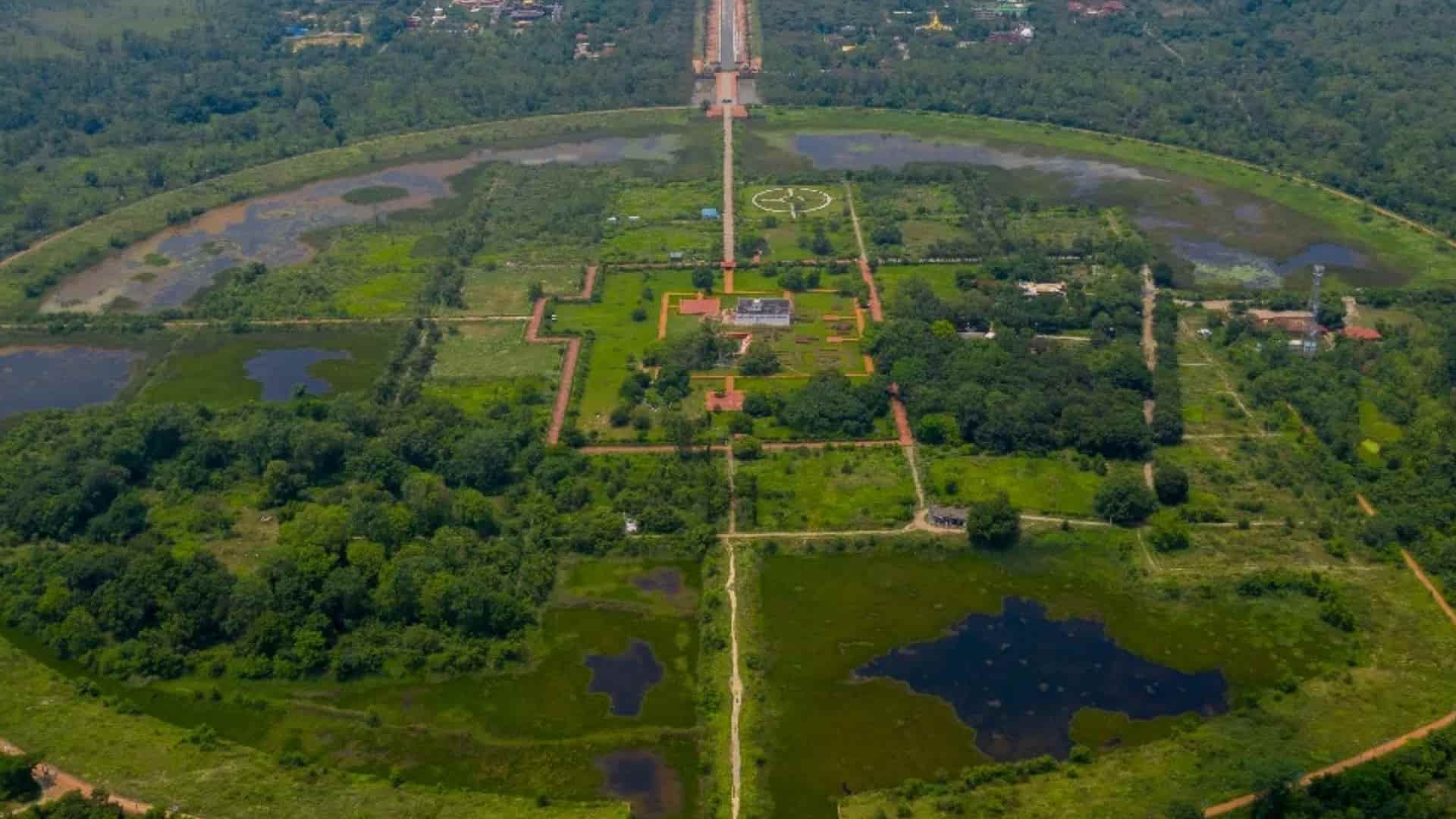
Lumbini is more than a religious destination. Recognised as the birthplace of Siddharth Gautam, the founder of Buddhism, it is one of the world’s most important archaeological and cultural heritage sites and a UNESCO World Heritage Site.
At the centre of its conservation and development is the Lumbini Development Trust (LDT), an autonomous institution established by the government to protect the birthplace of Buddha, develop Buddhist heritage sites and promote Lumbini as an international destination for pilgrimage and cultural exchange. However, the institution has recently found itself at the centre of controversy over its latest leadership appointment.
The Trust’s responsibilities extend beyond the Maya Devi Temple and the sacred garden. It oversees the implementation of an international master plan conceived nearly five decades ago, manages heritage-related infrastructure and coordinates development initiatives across the Greater Lumbini Area.
Its work involves substantial financial resources, government agencies, international organisations, religious institutions and local governments. Consequently, decisions made by the Trust affect not only religious tourism and heritage conservation but also public infrastructure, local businesses and economic opportunities in the surrounding communities.
However, delays in implementing the master plan, questions about financial accountability and recurring controversies surrounding leadership appointments have raised questions about how the institution is managed.
Understanding the Trust’s mandate, projects and finances is essential to understanding why its administration matters.
How was the Trust established?
The international initiative to develop Lumbini gained momentum following a visit by then United Nations Secretary-General U Thant in April 1967.
Concerned about the neglected condition of Buddha’s birthplace, Thant proposed an international initiative to preserve and develop the site. His proposal received support from then King Mahendra and subsequently gained attention at the United Nations.
An international support committee was established in 1970, bringing together countries interested in developing Lumbini. Japanese architect Kenzo Tange was commissioned in 1972 to prepare a comprehensive development plan.
The plan was completed and approved by the Nepal government in 1978. It envisioned transforming Lumbini into an international centre for Buddhist pilgrimage, peace and cultural exchange.
The government initially established the Lumbini Development Committee to oversee the initiative. The institution was subsequently reorganised as the Lumbini Development Trust under the Lumbini Development Trust Act, 2042 (1985).
The Trust operates under the Ministry of Culture, Tourism and Civil Aviation and has statutory autonomy to plan and implement development activities.
Its governing structure includes a council chaired by the culture minister and an executive committee responsible for implementing the council’s decisions. The member-secretary holds the executive position, while the vice-chairperson is responsible for supervision, inspection, monitoring and implementing executive committee decisions.
The Trust receives financial support from the government, national and international organisations and its own revenue-generating activities.
Why is the Trust important?
The Trust’s responsibilities extend well beyond managing the Maya Devi Temple, the central religious site in Lumbini.
Its mandate covers the conservation and development of several archaeological and religious sites associated with Buddha’s life.
These include:
These locations form part of the wider Greater Lumbini Area, which is being developed as an integrated religious, cultural and archaeological tourism destination.
The Trust’s responsibilities include protecting archaeological remains, maintaining heritage infrastructure, developing pilgrimage facilities and coordinating with national and international institutions.
Lumbini is also a key part of Nepal's tourism economy. Its international religious significance attracts pilgrims, researchers and tourists from across the world. In 2025, 1.1 million tourists visited the sacred site.
The challenge however is to translate visitor numbers into longer stays, greater local spending and employment opportunities. The Trust therefore sits at the intersection of heritage conservation, tourism development, and local economic growth.
The Lumbini Master Plan: A project nearly five decades in the making
The Lumbini Master Plan remains the Trust’s most significant long-term development responsibility.
The plan designed by Kenzo covers approximately three square miles, or 770 hectares.
The master plan divides the development area into three principal zones.
Sacred Garden
This is the central religious and archaeological area, containing the Maya Devi Temple, Ashoka pillar, ancient monastic remains and other archaeological structures.
International Monastic Zone
The area is divided into eastern and western sections, allowing Buddhist communities and countries to establish monasteries representing different traditions.
Countries including Sri Lanka, Myanmar, Thailand, Cambodia, China, Japan, South Korea, Singapore, France, Germany and Vietnam have established monasteries in the area.
New Lumbini Village
The third zone was envisioned as a service and infrastructure centre, providing accommodation, public facilities, commercial services and other amenities for pilgrims and visitors.
Several components have been completed, including the landscaping of the Sacred Garden, central canal, symbolic pavilion and northern and southern ponds.
However, substantial infrastructure remains unfinished. These include the proposed 420-seat U Thant auditorium, six large circular buildings, a primary health centre, bus park, high school, restaurants, souvenir shops and additional accommodation facilities.
The management of the Harahewa River, waste management systems, water distribution infrastructure and other basic services also remain incomplete.
Initially expected to be completed within 17 years, the master plan has now been extended to 48 years.
The extent of completion, however, remains disputed.
Trust Member Secretary Dipak Shrestha said in May 2026 that more than 88% of the master plan had been completed. However, heritage expert Prahlad Yadav questioned the methodology used to calculate progress, arguing that there was no scientific basis for the figure.
The absence of an independent assessment makes it difficult to establish precisely how much work remains.
How much money is involved?
The Trust manages several financial streams, including government grants, visitor fees, donations, property leases and income from other activities.
Its finances need to be understood through three separate categories: its annual operating budget, funding allocated for major development projects and money generated through its own activities.
The Trust’s annual budget
In November 2024, the Trust’s council approved an estimated income and expenditure budget of NRs 775.92 million for fiscal year 2024/25.
The projected sources of income included:
The budget prioritised implementation of the Lumbini Master Plan, infrastructure development, compliance with UNESCO World Heritage Committee recommendations, promotion of Tilaurakot as a potential World Heritage Site and coordination with local governments.
The Trust also planned to increase internal revenue through visitor fees, donations, butter lamp lighting services, parking fees, property leases and timber auctions.
These figures represent projected income, not necessarily the amount received or spent during the fiscal year.
Funding for the master plan
A much larger financial commitment was announced in 2021, when the government allocated NRs seven billion for implementing the Lumbini Master Plan. The first phase involved contracts worth NRs 3.60 billion. However, payments to contractors remained incomplete.
In 2025/26, NRs 410.9 million was allocated for the master plan, while approximately NRs 600 million was still required to settle existing liabilities.
A second-phase contract worth NRs 2.89 billion was also signed, but work orders had not been issued because the required budget had not been released.
These figures represent different stages of project financing and should not be interpreted as actual expenditure. The NRs 7 billion commitment, contract values and annual budget allocations are not interchangeable.
Where does the Trust earn its money?
The Trust generates its own revenue through several activities, including conservation fees collected from visitors entering the Maya Devi Temple, donations and offerings, land and property leases, contracts, auctions and other services.
According to media reports, the Trust generates approximately NRs 170 million to NRs 180 million annually.
The conservation fee is its largest revenue source, contributing approximately NRs 80 million to NRs 100 million annually. Donations and other contributions bring in another NRs 20 million to NRs 30 million, while leases, contracts and auctions generate approximately NRs 20 million to NRs 30 million.
However, the Trust spends approximately NRs 120 million to NRs 130 million annually on salaries and allowances alone.
Once administrative and operational costs are included, its expenditure exceeds its income. The institution has reportedly remained in deficit for the past three years.
The government does not provide a separate allocation for the Trust’s routine administrative expenses. Its government funding is directed towards development projects, while the institution relies on its own income to meet regular operating costs.
The difference between the Trust’s annual revenue and expenditure raises questions about its long-term financial sustainability, particularly as it continues to oversee large development projects.
Beyond the master plan: Other development initiatives
The Trust’s responsibilities are not limited to the original master plan. New initiatives have sought to develop Lumbini and surrounding archaeological sites as an integrated tourism destination.
Greater Lumbini Area Development Project
The World Bank-backed Greater Lumbini Area Development (GLAD) initiative is among the major development efforts involving the region.
Highlighted by the World Bank in September 2026, the initiative focuses on four locations: Lumbini, Tilaurakot, Ramgram and Devdaha. In 2026/27, the government allocated NRs 830 million for GLAD.
The project’s objectives include improving tourism infrastructure, strengthening heritage conservation, developing visitor services and creating employment opportunities for surrounding communities.
The initiative also seeks to encourage private investment and increase the amount of money visitors spend in the region.
The Ministry of Infrastructure Development executes the project, with the Department of Urban Development and Building Construction, Ministry of Culture, Tourism and Civil Aviation and Department of Archaeology among the implementing agencies.
The Lumbini Development Trust, Nepal Tourism Board, participating municipalities, UNESCO and international heritage partners are involved in coordination and implementation.
The project is a separate government-led development initiative. Its financing should not be confused with the Trust’s annual budget or the government's earlier commitment to the Lumbini Master Plan.
Tilaurakot’s potential World Heritage status
The Trust has also prioritised the development and international recognition of Tilaurakot.
The archaeological site in Kapilvastu is traditionally identified with the ancient Shakya settlement where Siddharth Gautam lived before renouncing his royal life.
Its conservation and potential inscription on the UNESCO World Heritage List could strengthen the wider Greater Lumbini Area as an international heritage destination.
International Buddhist cooperation
The Trust also facilitates international Buddhist cooperation through the development and management of monasteries, religious events, cultural exchanges and international conferences.
The International Conference on the Greater Lumbini Area, held from September 18 to 20, 2026, brought together more than 150 participants, including government representatives, local communities, religious institutions, entrepreneurs and international development partners.
Why has the Trust faced controversy?
Despite its international significance, the Trust has repeatedly faced questions about political appointments, financial accountability, land management and the quality of development projects.
One major controversy concerned the international conference hall and Buddhist meditation centre built during the tenure of former vice-chairperson Awadhesh Kumar Tripathi.
The 5,000-seat facility reportedly cost NRs 630.8 million. According to media reports, the construction raised questions about compliance with the master plan, while the building reportedly developed leaks before it was formally handed over.
Tripathi also faced questions over the leasing of land to Siddhartha Enterprises. Part of a plot previously leased to the International Crane Foundation for 50 years in 1994 was reportedly set aside and rented to the company.
His successor, Lharkyal Lama, faced allegations concerning citizenship and passport documents, as well as complaints filed with the Commission for the Investigation of Abuse of Authority over alleged abuse of office and illegal accumulation of wealth.
The Office of the Auditor General also raised questions about the Trust’s expenditure and the accounting of donations and offerings received during Lama's tenure.
Another controversial proposal involved leasing land around the Ramgram stupa area to Singapore-based Moksha Foundation and Nepal-based Promised Land.
The proposal involved 120 bigha, equivalent to approximately 81.27 hectares, for a long-term development arrangement. Of this, 116 bigha belonged to residents and would have required acquisition.
The Trust subsequently revoked permission following objections from the parliamentary Public Accounts Committee and other government bodies.
These controversies have raised questions about the institution’s procurement practices, financial reporting, land management and the government's approach to appointing senior officials.
Meanwhile, nearly five decades after the master plan was approved, the question remains whether the Trust can fulfil the vision that brought the international community together to develop Buddha’s birthplace.
Read More Stories
Public debt crosses three trillion, government raises 123 billion in loans in Q1
The countrys total public debt has crossed NRs 3 trillion by reaching NRs...

About a year ago, the idea that speculative investment has created an AI...

NEPSE gains nearly 60 points this week as turnover surges 51%
The stock market witnessed a slight correction on Friday, ending its three-day winning...