
What we do is costly! Your support will help us dig more stories.
Yes, I'm Interested!Ignorance isn't always bliss | Don't stay foolish.
Keep informed | Read our news and analysis.
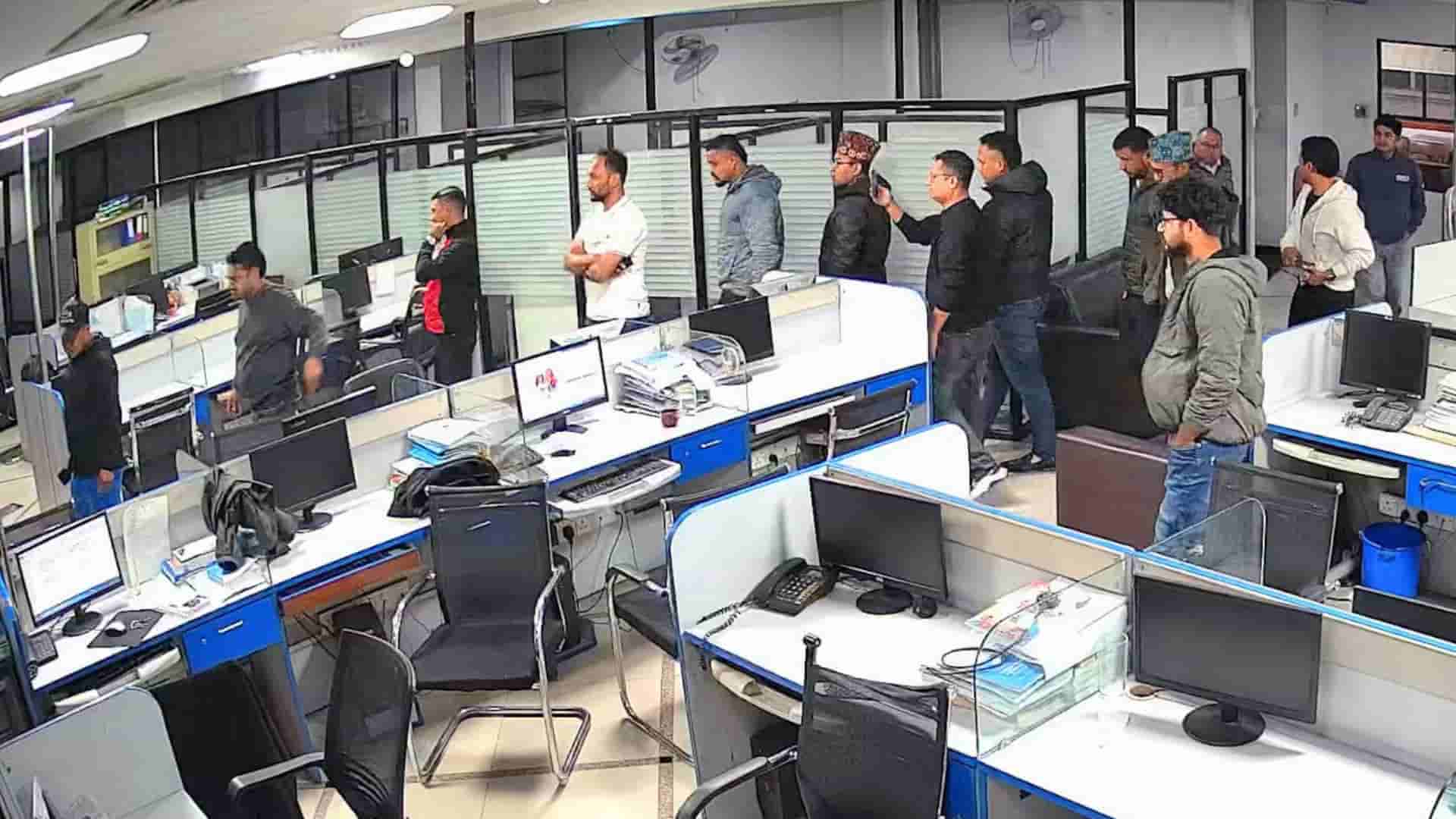
The police arrived at newsrooms on Friday afternoon. They searched offices, questioned journalists and detained three of them, triggering widespread condemnation from media organisations, civil society groups and political parties. By the time the police released the journalists later that evening, the episode had raised a question that goes beyond the legality of the detentions: why did the authorities choose to act just before a weekend?
On October 30, police teams entered the offices of Naya Patrika and Diyo Post and took journalists into custody. The three detained were Bishwamani Subedi, Dhiraj Basnet and Shobharaj Baral. Police also attempted to locate other journalists, including Diyo Post editor Sudeep Bishwakarma and journalist Madan Dhungana, but did not succeed.
The detentions drew immediate protests. The Federation of Nepali Journalists, Press Council Nepal, Freedom Forum, Media Action Nepal, Gen Z Journalist Forum Nepal and other organisations condemned the police action. The Press Council said the journalists had been detained without being shown arrest warrants and questioned the grounds for their detention. It also argued that complaints concerning published material should be addressed through the council’s established mechanisms, rather than by police raids and arrests. The three journalists were released later that evening following mounting criticism.
The police explained in a statement circulated at around 1:40 AM on October 31 through the Nepal Police's official WhatsApp group for journalists. According to the statement, the Cyber Bureau had summoned the journalists following concerns raised by the PM Office about their reporting.
The PM Office, however, denied prior knowledge of or involvement in the police action. It said Prime Minister Balendra Shah had ordered the journalists’ release after learning about their detention. The contradictory accounts raised questions about who authorised the operation and what prompted it. Nepali Times subsequently reported that the police statement had disappeared from the Nepal Police website, although other outlets reported its circulation in the journalists’ WhatsApp group.
The ruling Rastriya Swatantra Party also condemned the police action and called for an investigation and action against those responsible. The response was significant given that the incident had taken place under a government led by the party.
But accounts published over the following two days suggested that the operation may have been more extensive than the initial detentions indicated.
A November 1 report by Naya Patrika, citing sources familiar with the operation, said the Prime Minister’s Secretariat had provided police with a list of 28 journalists. Following discussions, seven were reportedly shortlisted for immediate detention. The report said the plan also involved seizing journalists’ electronic devices to identify the sources behind their reporting.
The report did not say seven journalists were detained. Three were taken into custody, while police attempts to locate or detain other journalists reportedly did not succeed. The identities of all 28 people on the alleged list have not been made public, and the list itself has not been independently authenticated. These claims therefore remain allegations requiring an official explanation.
A separate Kathmandu Post report, citing a senior police source, described discussions involving senior officials from the Prime Minister’s Secretariat and the Home Ministry, as well as Inspector General of Police Dan Bahadur Karki. The report said the IGP subsequently instructed a police team to carry out the operation. It also said the police wanted to access journalists’ phones to identify their sources but could not do so amid public opposition. The PM Office and the Home Ministry have denied or declined to accept responsibility for the operation.
These accounts have yet to be reconciled. The government and police should clarify who initiated the operation, what legal grounds were cited, who approved the deployment and whether any instruction was issued to seize journalists’ devices or identify their sources. Without such answers, the incident risks becoming another instance in which state agencies act first and provide explanations only after public pressure.
A pattern of pressure
The newsroom raids did not happen in isolation. They followed months of incidents that have raised concerns about the government’s attitude towards independent journalism.
On September 8, Home Minister Sudhan Gurung threatened three or four unnamed journalists to “mend their ways”, accusing some of being driven by partisan interests. Speaking at a Gen Z Martyrs’ Day event at the old Parliament building in New Baneshwar, he called on the journalists to reform alongside political parties. His remarks drew criticism from journalists and civil society figures, who demanded that he withdraw them and apologise.
In July, vehicles were parked in ways that obstructed the entrances of Kantipur Publications, Onlinekhabar and Himalaya Television. The incidents raised concerns about intimidation of media organisations. However, only the vehicle outside Kantipur was traced to Rabi Jaiswal, a member of the RSP’s Central Research and Documentation Department. The ownership or political affiliations of the vehicles outside the other two media houses were not established. It would therefore be inaccurate to attribute all three incidents to the ruling party.
There have also been less visible forms of pressure. Media Action Nepal has documented intimidation, including calls seeking the location of Diyo Post’s office and threats directed at its editor, Sudeep Bishwakarma. Such incidents can create a climate in which journalists face pressure not only through formal state action but also through the threat of harassment and violence.
Former FNJ president Shiva Gaunle compared the newsroom raids and attempts to identify journalistic sources with practices associated with the media crackdown during King Gyanendra’s rule. The comparison reflects the seriousness with which parts of the media community view the incident. A free press cannot function when journalists fear that critical reporting may invite surveillance, intimidation or detention.
When the courts are harder to reach
The timing of the October 30 operation has also revived concerns about executive action immediately before weekends and public holidays, when ordinary access to government offices and judicial services can become more difficult.
A similar concern emerged in April, when authorities moved to evict people living in informal settlements in Kathmandu. On Friday, April 24, the Kathmandu District Administration Office issued a notice requiring residents to vacate by 7 PM. Demolitions began the following day, Saturday, April 25, including in Thapathali. Residents and rights advocates approached the Supreme Court on Monday, April 27. The court issued a show-cause order, and on May 8 directed the government not to forcibly displace informal settlers without following legal procedures and making appropriate arrangements.
The two incidents are different in nature and should not be treated as equivalent. One involved the detention of journalists; the other involved the displacement of people from their homes. But both raise a question about the consequences of acting immediately before a period when access to ordinary legal remedies may be constrained.
The concern is not that the law stops operating on Fridays. It does not. Article 20(3) of the Constitution requires an arrested person to be produced before a judicial authority within 24 hours, excluding the time necessary for travel. Detention beyond that period requires judicial authorisation. A weekend or public holiday does not suspend this constitutional protection.
Nor does a court closure give the executive a free hand. The Supreme Court has issued directions for emergency judicial services during weekends and extended holidays, including arrangements for urgent matters. However, availability and effectiveness of such services remain important questions whenever state action risks causing immediate and irreversible harm.
The distinction between legal authority and practical access to justice is important. A person detained on Friday may still have constitutional protections, but their ability to secure prompt legal assistance and challenge the action can be affected by the timing. For people whose homes are demolished or whose livelihoods are disrupted, a court order issued days later may not fully undo the damage.
It would be premature to conclude that the government deliberately schedules controversial actions for weekends to avoid judicial scrutiny. Establishing such intent would require evidence, including internal communications, operational instructions and a clear account of the decisions behind these actions. But repeated incidents warrant scrutiny, particularly when authorities have not provided convincing explanations for their timing.
The burden of explanation
The government has a responsibility to enforce the law. It also has a responsibility to explain the legal basis of its actions, respect constitutional safeguards and ensure that state institutions do not become instruments of intimidation.
In the case of the newsroom raids, the conflicting accounts from the police and the PM Office make an independent investigation necessary. The alleged list of 28 journalists, the reported shortlist of seven and claims that police intended to seize devices to identify sources must be examined. Journalists should not have to rely on anonymous sources and media reports to understand why the state targeted their workplaces.
The government must also recognise that press freedom is not a privilege granted by those in power. It is a constitutional right and a condition of democratic accountability. Journalists can be questioned, and reporting can be challenged through lawful processes. But entering newsrooms, detaining journalists without clear legal grounds and seeking to expose confidential sources risks undermining the very freedom that allows the public to scrutinise those who govern.
The question, ultimately, is not whether the government can act on a Friday. It is whether it can demonstrate that its actions are lawful, necessary and accountable, regardless of the day of the week.
A government should not have to wait for Monday to respect the law.
Read More Stories

A cleaner, safer way to cook for Chitwan’s Bote community
For the Bote community of Patihani in Chitwan, collecting firewood has long been...
Public debt crosses three trillion, government raises 123 billion in loans in Q1
The countrys total public debt has crossed NRs 3 trillion by reaching NRs...

About a year ago, the idea that speculative investment has created an AI...