
What we do is costly! Your support will help us dig more stories.
Yes, I'm Interested!Ignorance isn't always bliss | Don't stay foolish.
Keep informed | Read our news and analysis.
PUBLIC HEALTH | EDCD | DENGUE VIRUS
Eleven people have died so far due to dengue this year.
As of October 21, a total of 22,082 dengue cases have been reported affecting 76 districts with Humla as an exception, says the report by the Epidemiology and Disease Control Division (EDCD), the federal authority responsible for epidemic preparedness, surveillance, and control programmes in the country.
Gandaki Province has recorded the highest number of cases (9,531) followed by Bagmati (7,768), Koshi (1,646), and Lumbini (1,348).
Kathmandu district has reported the highest 3,594 cases followed by Kaski (3,188), and Tanahun (2,195).
In September, there were 8,751 reported cases, while October has seen 6,443 cases so far. In 2023, October alone recorded a total of 12,699 cases, indicating that the risk remains high. Although dengue peaks during the post-monsoon period (which is ongoing), the recent trends suggest that the disease has become endemic in Nepal, with outbreaks occurring even in winter.
Last year, the country recorded 51,243 total cases across all 77 districts of Nepal while 20 people lost their lives to the disease.
Nepal faced its deadliest year in 2022 with 54,784 cases and 88 lives lost.
The first dengue case was reported in 2004 in Chitwan, which was also the only reported case between 2004 and 2005.
People are susceptible to contracting dengue more than once in their lifetime. The risks associated with subsequent dengue fever infections are substantially higher than those associated with the initial sickness.
Dengue, also known as break-bone fever, is a viral infection caused by the Dengue virus (DENV). The virus has four serotypes (DENV-I, DENV-2, DENV-3, DENV-4). The human body only becomes immune to the strain it has contracted.
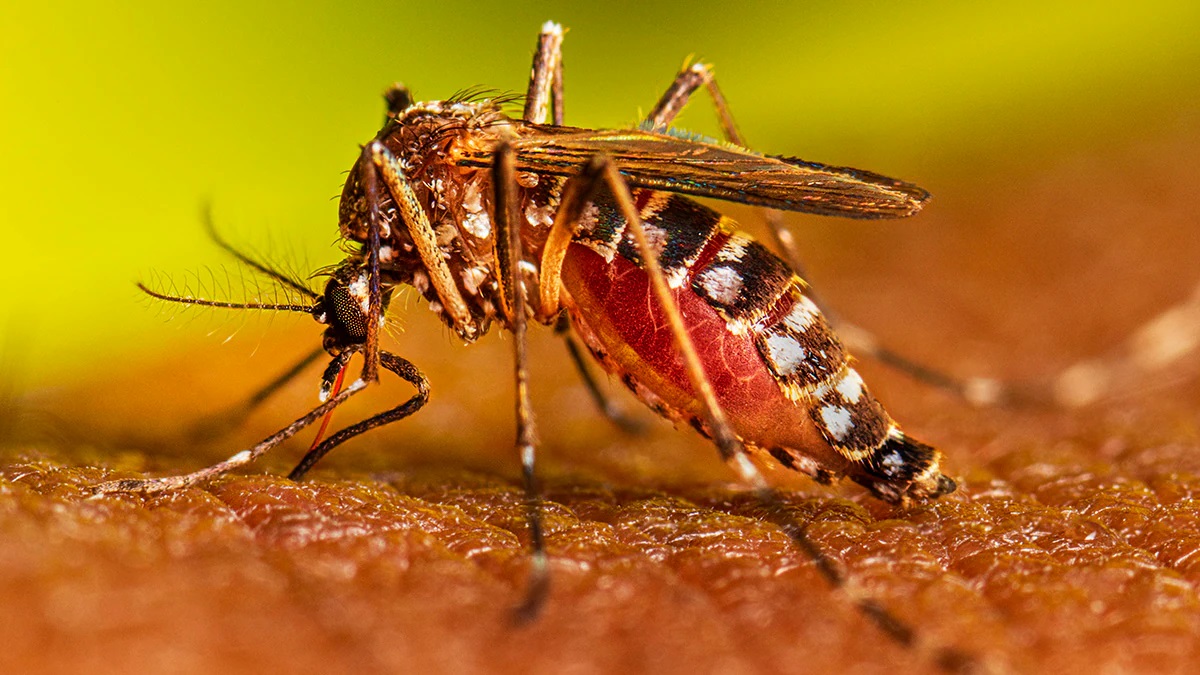
Dengue is transmitted by female Aedes aegypti or Aedes albopictus mosquitoes that typically reside indoors and are active during the day (but bite at night too) and thrives in densely populated urban areas.
Symptoms can vary from being asymptomatic progressing to severe dengue hemorrhagic fever (DHF) and dengue shock syndrome (DSS). Mild to high fever, mild to severe muscle pain, joint pain, bone pain, headache, rashes, pain typically behind the eyes, nausea, and vomiting.
In severe cases, there is severe and continuous pain in the abdomen, bleeding from the nose, mouth, and gums or skin bruising, frequent vomiting with or without blood DHF, progressing to DSS reduction in blood volume that prevents the heart from pumping enough blood to the body resulting in a sharp drop in blood pressure (shock) and multiple organ failure.
Read More Stories

NEPSE rises 28 points as trading activity improves
The stock market rebounded on Friday, with the NEPSE index gaining 27.94 points,...

Government estimates NRs 723 billion needed to rebuild flood-damaged areas
The government has estimated that NRs 723.31 billion will be required to rebuild...

Market falls by double digit for second session as turnover declines
The stock market extended its decline for a second consecutive session on Thursday,...