
What we do is costly! Your support will help us dig more stories.
Yes, I'm Interested!Ignorance isn't always bliss | Don't stay foolish.
Keep informed | Read our news and analysis.
Protest | Severe Water Scarcity | Drought-hit Zone | Terai-Madhes | Chure Exploitation
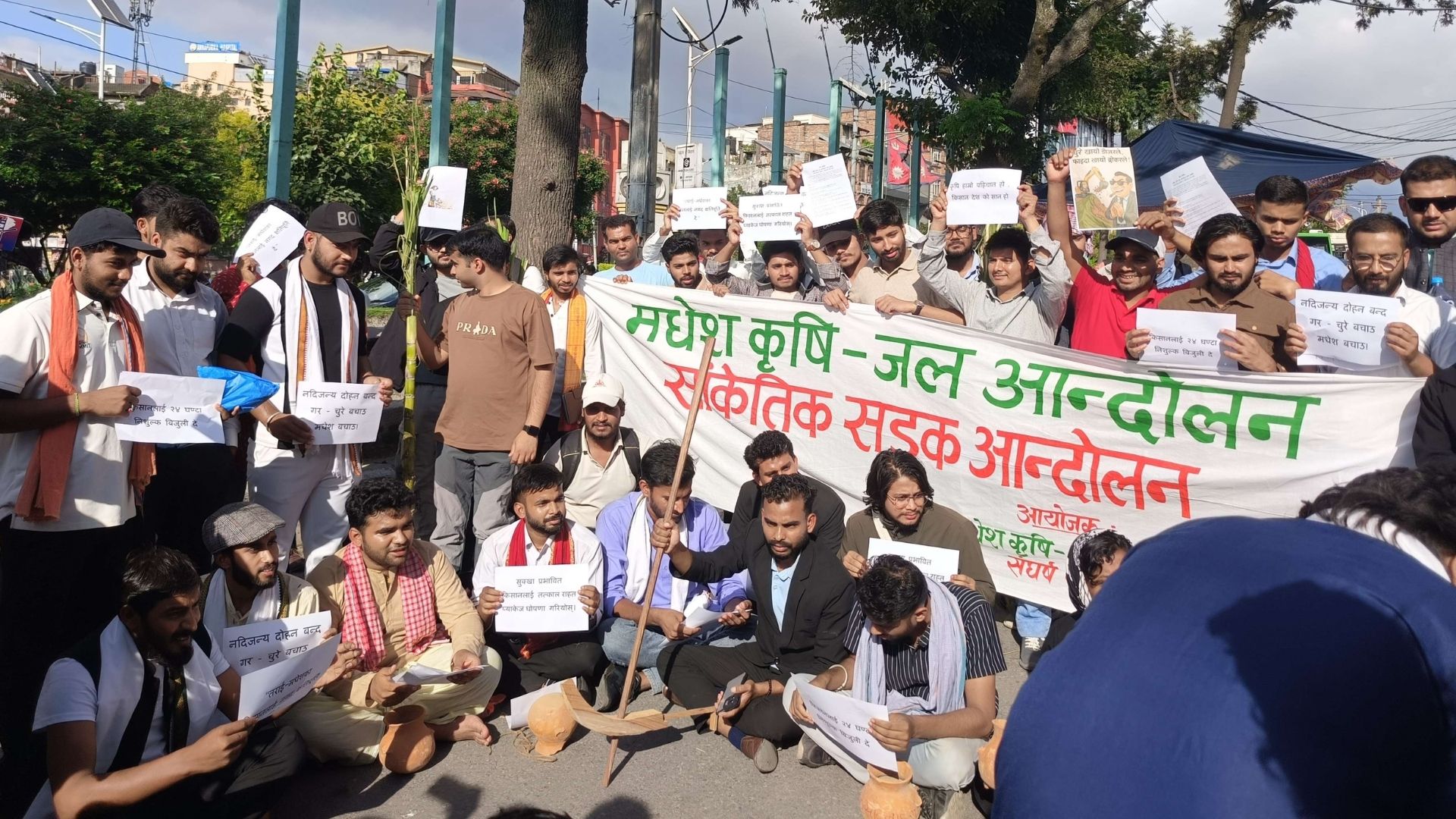
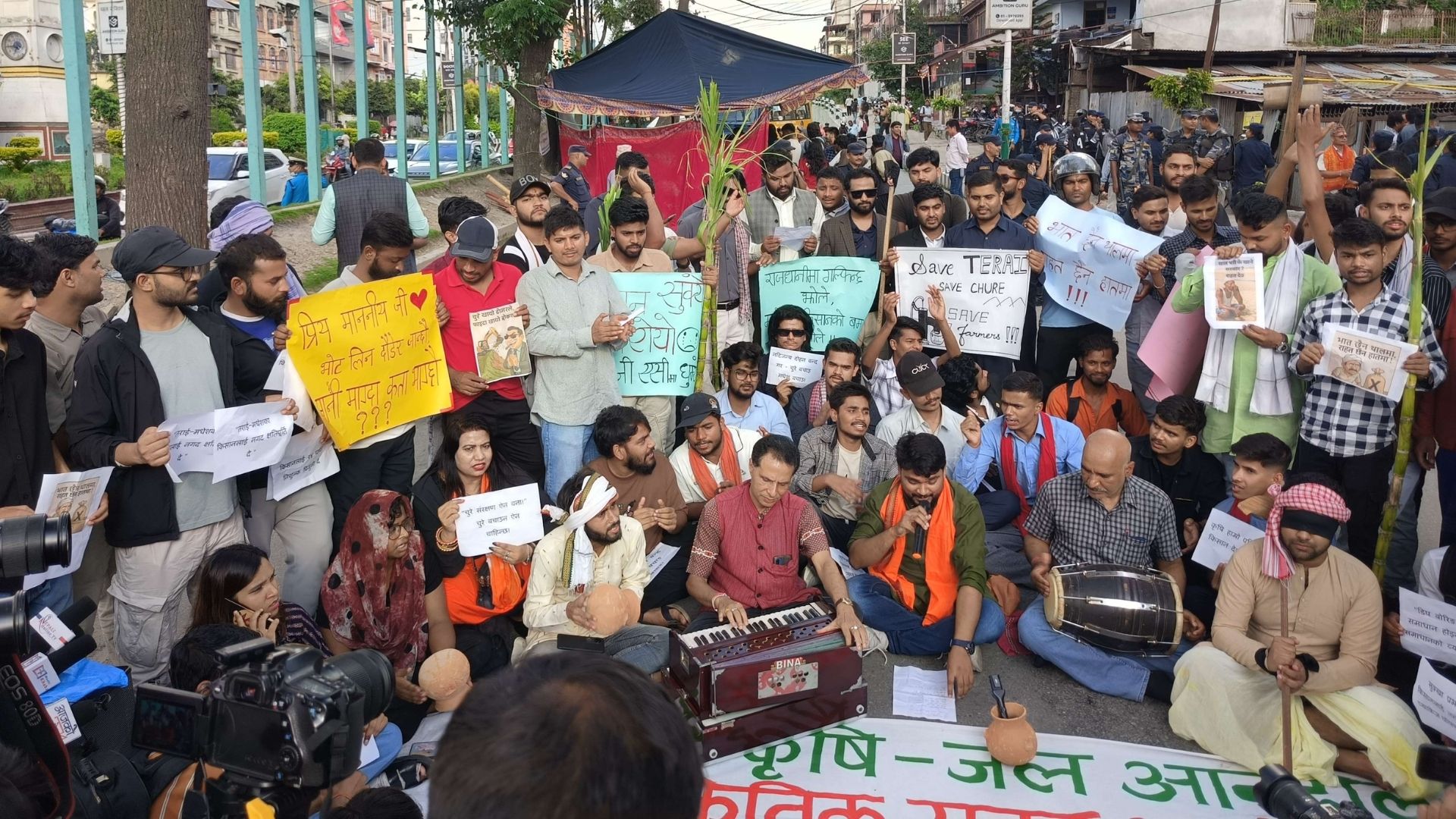
Youths from the Terai-Madhes region come together in Kathmandu to protest government negligence in handling the drought in the region.
Under the banner of the Madhesh Agriculture-Water Movement Struggle Committee, they initiated a series of protests with a symbolic street demonstration at Maitighar Mandala on August 1, demanding urgent government action to address the severe water crisis and agricultural distress in the plains. The committee has issued a public appeal outlining their demands, declaring the start of a “grand campaign” for the “existence and identity” of Madhes.
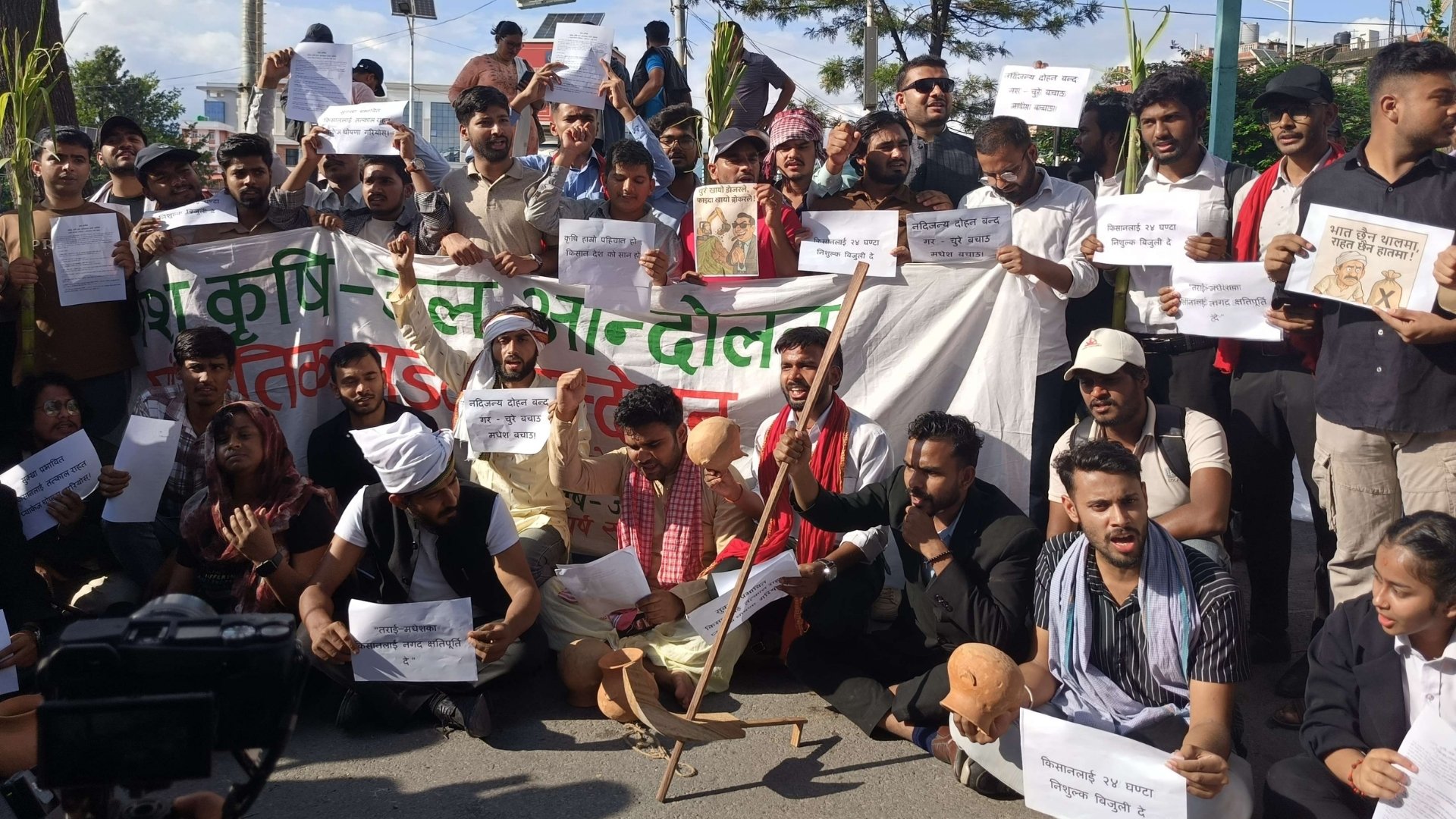
The protest comes after a month of failed monsoon rains, which have left the region dry. “It has been about a month since we celebrated Asar 15... Even after a month, if you look at the situation in Madhesh, only 49% of the rice planting has been completed,” said Sujit Kumar Pandit, a coordinator for the struggle committee. He attributed the crisis to a long-standing lack of proper irrigation infrastructure and government inaction.
The committee’s public appeal accuses the government of “policy of neglect, exploitation, and disregard” of the Chure region, which they claim is leading the fertile Terai-Madhes plains towards desertification.
Their demands include immediate cash compensation for farmers who couldn’t plant crops, guaranteed access to drinking water in every ward, and free irrigation equipment and electricity for agricultural purposes.
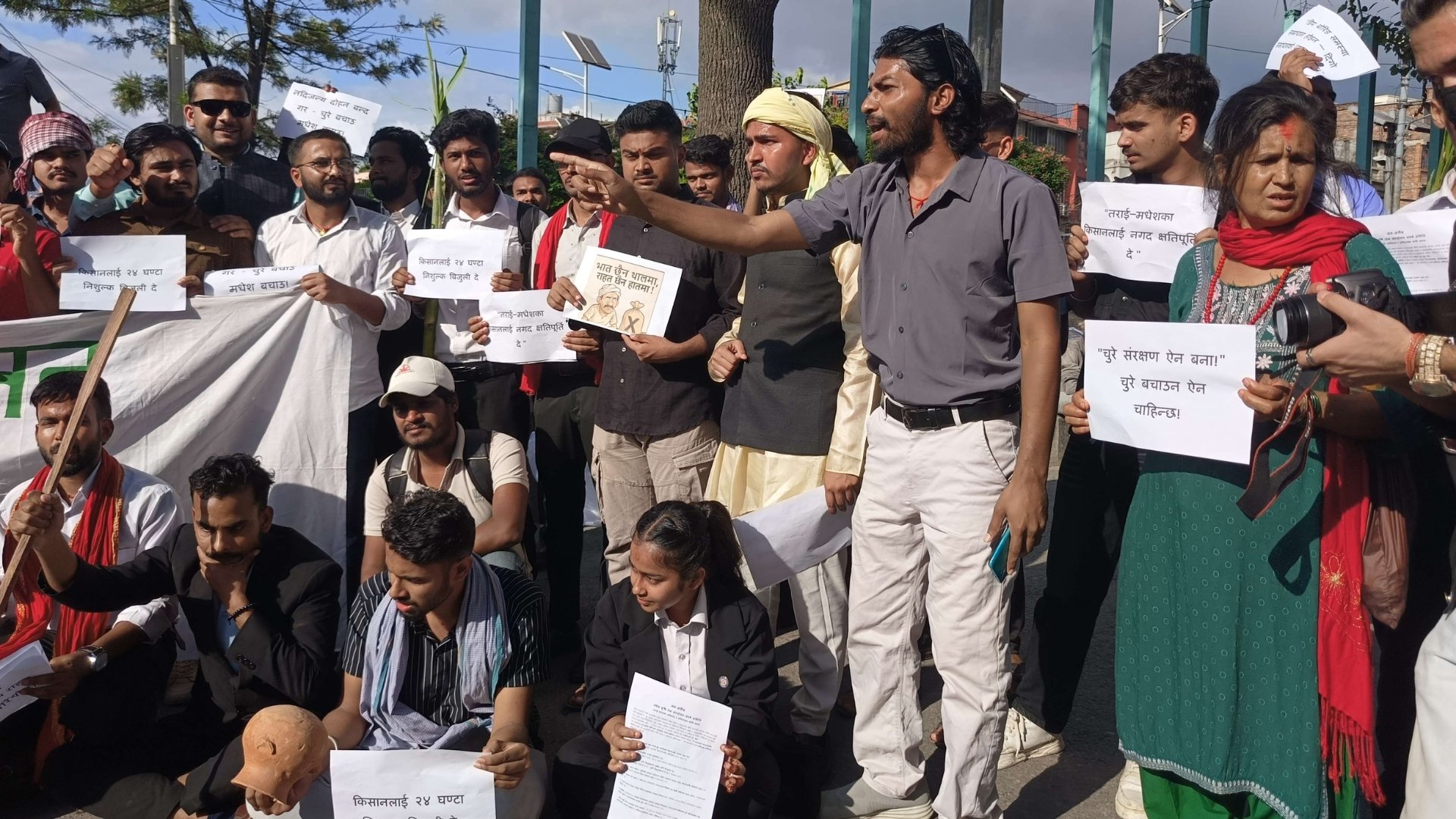
They call for an immediate halt to the “unscientific excavation” and export of riverbed materials from Koshi, Madhesh, and Lumbini provinces. They also demand the swift enactment of a Chure Conservation Act to protect the fragile Chure range, which is vital for the region’s ecosystem, and the completion of long-stalled river diversion and irrigation projects.
The struggle committee has emphasised that it is a non-partisan coalition of farmers, environmentalists, youth, and rights activists.
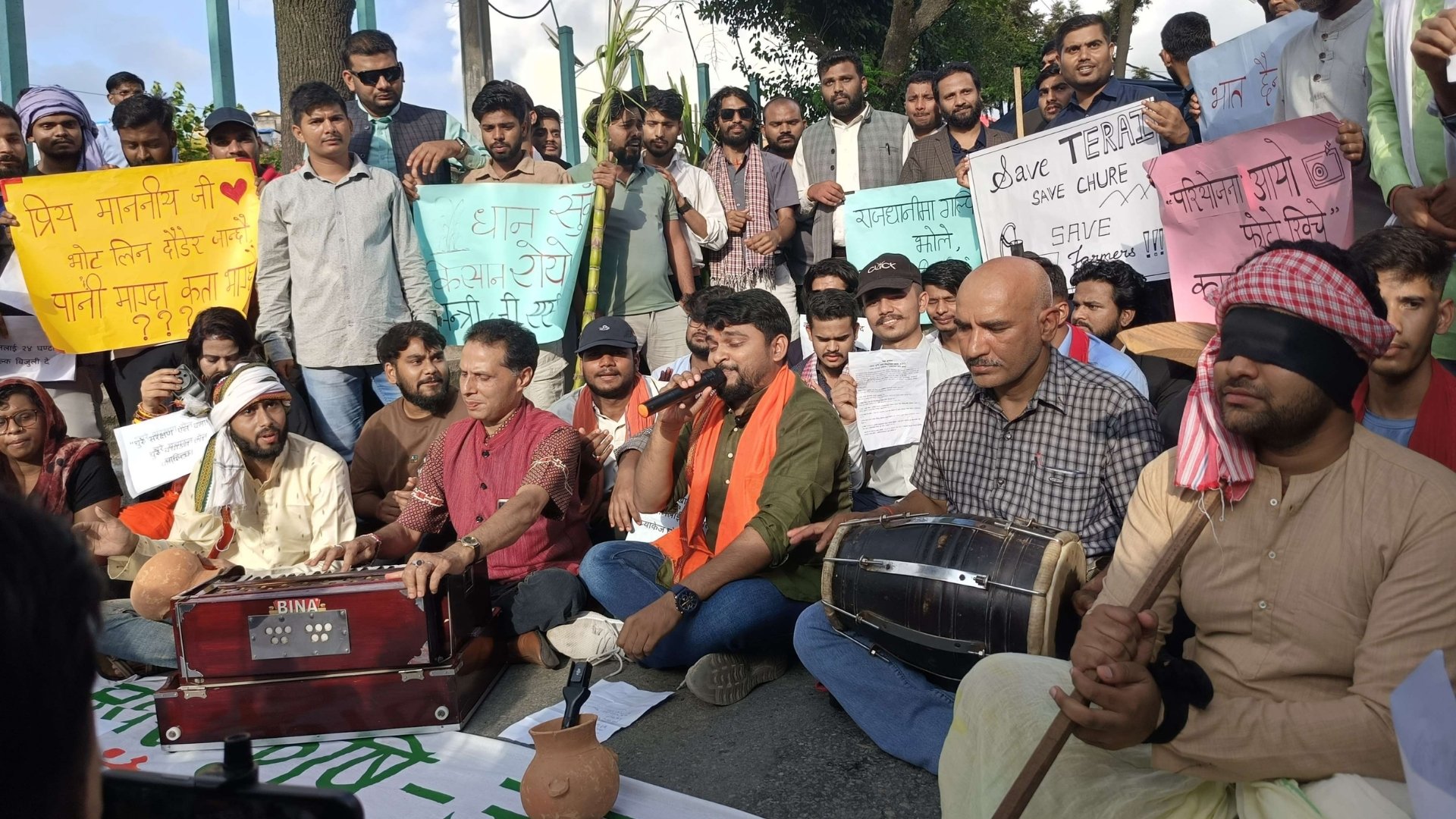
While the August 1 protest was symbolic, organisers have made it clear that this is just the beginning. “This is not a one-day program,” Pandit stated firmly. “It is a movement, a grand campaign.” The committee plans to review the public’s response before announcing the next phase of their agitation.
Read More Stories

NEPSE rises 28 points as trading activity improves
The stock market rebounded on Friday, with the NEPSE index gaining 27.94 points,...

Government estimates NRs 723 billion needed to rebuild flood-damaged areas
The government has estimated that NRs 723.31 billion will be required to rebuild...

Market falls by double digit for second session as turnover declines
The stock market extended its decline for a second consecutive session on Thursday,...