
What we do is costly! Your support will help us dig more stories.
Yes, I'm Interested!Ignorance isn't always bliss | Don't stay foolish.
Keep informed | Read our news and analysis.
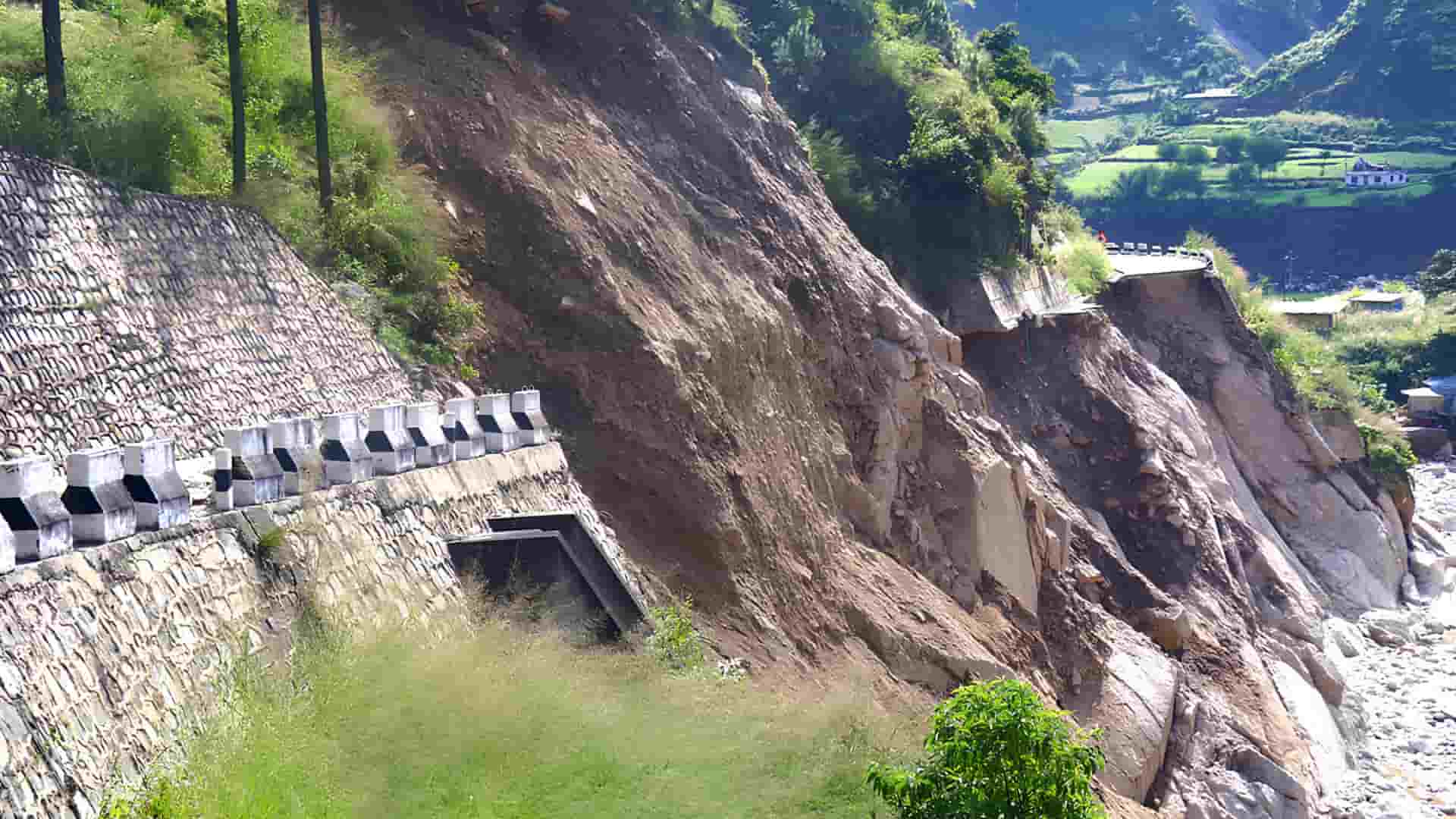
Livelihoods in Nepal’s remote farming and rugged mountain settlements wake up early to regular economic activities. Essentially, agriculture and nature-based tourism are key economic drivers of rural Nepal. With the arrival of monsoon, agricultural productivity blooms with the shades of green, while international travelers boost rural economies sustaining local production, teahouses, lodges and micro-enterprises.
Mountain and hill communities invest in safeguarding their future often by accessing small-scale credit facilities from microfinance and cooperatives for economic support, be that buying seeds and fertilisers or upgrading their local enterprises.
However, that age-old cycle is increasingly being disrupted. For families across Nepal, including Terai communities, the mid-hills and high-altitude peaks, climate change is a lived reality now transforming routine lives, of course not for better, with flash floods, cloudbursts, severe droughts, landslides and erratic rainfalls shaping the environment. As severe environmental issues emerge, they also trigger financial stress weakening the stability of families. As harvests or local businesses suffer and tourism revenues collapse, rural households can be left in insolvency leading to systemic repayment failures. This dynamic forms a vicious cycle where climate risk causes systemic non-performing asset risk through the rural economy.
To understand this dynamic, it is essential to examine financial risk assessment alongside the socioeconomic realities and livelihood challenges faced by individuals engaged in informal and seasonal economic activities.
Consider the broader circumstances of rural Nepal, particularly those whose livelihoods depend on agriculture and seasonal tourism, fluctuating market demand, and access to cooperative or microfinance credit.
For instance, for a typical agri-household or businesses that rely on the winter season and travelers, irregular income and seasonal sales can make loan repayment difficult, highlighting how credit, while supporting livelihoods, also exposes them to financial and market risks.
These vulnerabilities become even more severe when climate disasters disrupt local economies. Consider a disaster as devastating as the Bhotekoshi this August which destroyed an entire economic corridor. Disaster, lesser in scale, had struck the area the year before, while the Melamchi and Roshi Khola disasters of the 2020s offer further examples of how climate-induced disasters can undermine local economic stability.
While it is the responsibility of the state: the three-tier governments and the central bank to provide necessary cushions in such instances, climate shocks are rapidly raising concerns over financial default considering Nepal’s over-dependence on weather-sensitive economic activities, and the complexity of its rural financial networks.
Nepal’s deprived sector lending framework channels credit to vulnerable and rural households, largely through microfinance institutions. As of mid-July 2025, BFIs allocated 5.40–6.61% of their outstanding loans to the deprived sector, which stood at NRs 296 billion as of July 2025. Although rural lending is not separately reported, these figures highlight the scale of credit exposure to households vulnerable to climate shocks and repayment difficulties.
The scale of risk exposure becomes clearer when national agriculture statistics are also considered. According to the 2021/22 census, some 4.13 million households are engaged in agriculture-related activities, accounting for 62% of all the households. Financial protection however remains limited.
Similarly, 12% of all the farm holdings had existing agriculture loans, down from the previous 22% in 2011/12. Cooperatives were the major source of loans (39%), followed by relatives (14%) and women groups (14%). More concerningly, only 4% of the total farmers have taken up agriculture insurance coverage with 84% out of the insured having livestock insurance, while only 8% had cereal-crop insurance. This shows farmers aren’t adequately protected against the diverse climate-related risks affecting agricultural production.
In the meantime, while mountain tourism is attracting national and international attention, strengthening economic activities, it too relies on favorable weather patterns.
Once the monsoon is random or disasters struck, fields fail to yield. Similarly, they create problems in mountain trails, ruining tourism potential.
How climate shocks travel through rural credit networks
In the absence of crop or business insurance protection, a lost season means a total loss of earnings. The problem extends beyond individual borrowers because rural lending arrangements are often interconnected. Nepal’s microfinance model is based on a group-lending model with relatives and neighbors providing mutual guarantees and peer support.
Consider a village where several households have borrowed from the same microfinance institution to operate small businesses, purchase livestock or invest in agricultural production. When disaster strikes in the village, the capacity of one household to support another also diminishes because everyone is dealing with the same financial emergency.
As repayment pressure deepens, rural borrowers may resort to borrowing from other sources, liquidating savings or selling productive assets to meet their existing financial obligations. They may offer temporary liquidity but weaken their ability to restore livelihoods. In the longer term, households risk entering a cycle of asset depletion, indebtedness and persistent poverty.
For lending institutions, the consequences are equally concerning. Cooperatives, microfinances and regional branches of banks with concentrated exposure to climate-sensitive geographical areas may face rising unpaid loans, deteriorating portfolio quality and liquidity pressures. If these risks aren’t adequately identified and managed, financial institutions may increasingly be reluctant to extend new credit to the affected communities.
Paradoxically, it is the same section of the country that needs investment to become climate-resilient, with investments in areas such as drip irrigation, climate-resilient seeds, improved water management, weather-resistant lodge structures and other resilient tourism infrastructure and diversified livelihoods.
Moving from conventional credit assessment to climate-responsive finance
Escaping such challenges requires a unified approach from the three tiers of government, Nepal Rastra Bank (NRB), financial institutions, insurance providers and local communities.
First, BFIs must evaluate geographical and climate risks at the time of credit appraisal and underwriting processes. Traditional assessments based on historical income, repayment records, and collateral values are insufficient where future cash flows are exposed to climate hazards. Lenders operating in disaster prone regions should evaluate how disruptions to roads, agricultural production, tourism and local markets could affect borrowers’ repayment capacity.
Second, climate risk should become an integral component of financial-sector risk management. NRB’s risk management guidelines 2026 issued in September provide an important regulatory development by defining climate risks as a major risk for consideration in credit portfolio risk. In line with this, NRB should mandate BFIs to maintain a capital buffer within its capital adequacy framework to absorb potential losses arising from climate-related shocks.
Third, Nepal needs to expand accessible and affordable insurance coverage for small farmers, rural entrepreneurs and other productive assets designed around the income patterns and financial capacities of rural borrowers. The agriculture census clearly highlights the considerable gap in agriculture insurance coverage.
Fourth, make flexible loan repayments part of disaster recovery plans. Presently, NRB has provided an immediate cushion for recent climate-induced victims by granting temporary repayment periods for affected businesses. However, short-term relief alone is insufficient. Climate-responsive grace periods should be incorporated into loan restructuring frameworks. Lenders should also explore flexible loan structures. For example, agricultural borrowers could benefit from repayment schedules aligned with harvest cycles, while tourism entrepreneurs with seasonal cash flows.
Financial instruments, particularly flexible credit facilities, can help communities recover from shocks. Flexible lending products like agro-revolving credit lines, social collateral loans, warehouse receipt financing (pledge loans), value-chain and contract farming credit, daily/weekly micro-overdrafts, assets-backed loans are few to name that can avert shocks from escalating into unmanageable debt.
Read More Stories

Market falls for third consecutive day as trading turnover declines
The stock market extended its losing streak for a third consecutive session on...

Meat inspection law comes into force in Kathmandu Valley, requiring official stamps on meat
The Animal Slaughterhouse and Meat Inspection Act, 2055, has come into effect in...

NEPSE falls 12.79 points as turnover climbs to Rs 4.73 billion
The stock market declined by double digits on Tuesday as the Nepal Stock...