
What we do is costly! Your support will help us dig more stories.
Yes, I'm Interested!Ignorance isn't always bliss | Don't stay foolish.
Keep informed | Read our news and analysis.
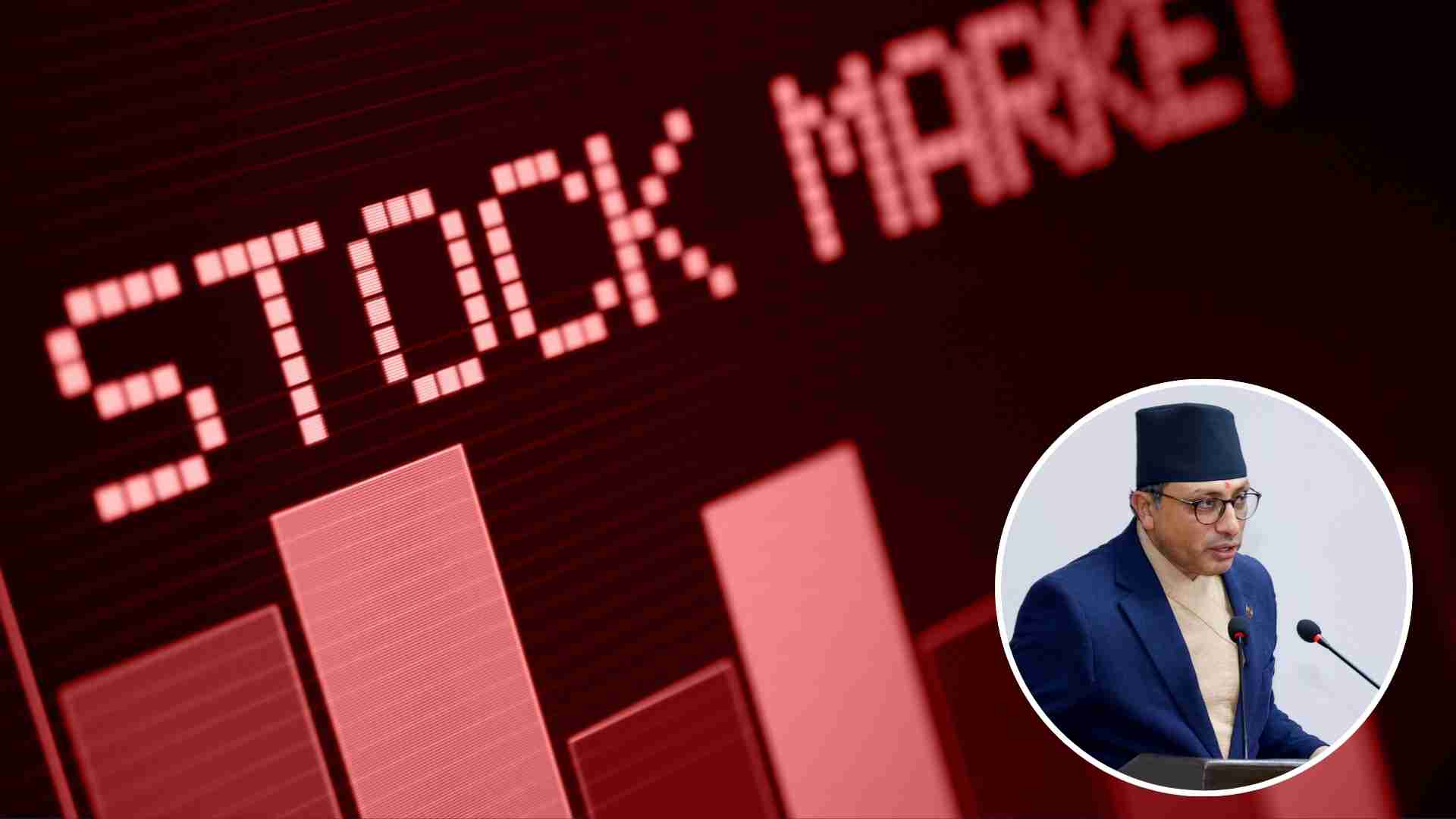
The stock market opened the week in the red as investors reacted negatively to the government's newly announced budget for fiscal year 2026/27, sending the Nepal Stock Exchange (NEPSE) index down 26.72 points, or 0.96%, to close at 2,755.37.
The decline came on the first trading day after Finance Minister Dr. Swarnim Wagle unveiled the budget, which introduced higher capital gains taxes on share transactions and raised concerns over the treatment of investment income for higher earners.
Under the new provisions, profits from shares held for less than one year will be taxed at 10%, up from 7.5%, while gains from shares held for more than a year will face a 7.5% tax, compared with the previous 5% rate.
Investor sentiment was further dampened by apparent ambiguity between the budget speech and the Finance Bill regarding whether capital gains tax remains a final tax settlement for individuals earning more than NRs four million annually. The perceived contradiction fueled uncertainty across the market.
After a volatile start, the benchmark index remained under pressure throughout the session, touching an intraday low of 2,746 points before recovering slightly by the close.
Market breadth reflected widespread selling. Share prices of 233 companies declined, while only 35 advanced and two remained unchanged. Daily turnover also fell to NRs 5.61 billion from NRs 6.03 billion recorded in the previous trading session.
The budget's impact was most visible in three sectoral indices.
Read also: Budget 2026/27 bets on NRN access, Nepal Telecom share sale and trading reforms
The "Others" sub-index rose 3.36%, driven largely by a 15% jump in Nepal Reinsurance Company shares after the government guaranteed the company a 20% share of domestic reinsurance business through the budget.
The non-life insurance sector gained 1.37% following the government's decision to double third-party motor insurance coverage to NRs one million, a move expected to boost premium collections.
The trading sector, however, recorded the steepest decline, dropping 6.14%. Shares of Bishal Bazaar Company fell nearly 7% after the government announced plans to divest and sell additional shares to the public.
Most other sectors ended lower, including hydropower, banking, finance, hotels and tourism, manufacturing, life insurance, microfinance and investment companies.
Market participants said the tax increase comes at a time when trading activity has already been weakening, raising concerns that higher transaction costs could further discourage both retail and institutional investors.
Although Finance Minister Wagle has insisted that stock market investors will not face double taxation and acknowledged some confusion surrounding the new provisions, Monday's trading suggested investors remain cautious until further clarification is provided.
Read More Stories
NEPSE rises 28 points as trading activity improves
The stock market rebounded on Friday, with the NEPSE index gaining 27.94 points,...

Government estimates NRs 723 billion needed to rebuild flood-damaged areas
The government has estimated that NRs 723.31 billion will be required to rebuild...
Market falls by double digit for second session as turnover declines
The stock market extended its decline for a second consecutive session on Thursday,...